Keep beating the dead horse
A while back I got a project: a website about internal transformation. The kind that gets attention now—motivational, full of stories, designed to push someone toward change.
The problem was twofold. First: after my favorite designer died, a good friend, I kept trying to fill his role. Graphic design, spacing, typography—I thought: given enough time and patience, I’ll learn it. But that was self-deception. What I can do is write clean code. Build interfaces that save people time. Design—the visual logic that someone *else* can actually feel working—that isn’t in me.
Second: I didn’t believe in the subject matter. Heroic transformation, the self-made human—it feels false to me. I’m more at home with Marcus Aurelius than Tony Robbins. So I built something I couldn’t build, for a philosophy I didn’t stand behind.
For weeks I bit that dead horse. Trials. Tweaks. Over and over. I knew it wasn’t working. I felt it was ugly. And I kept biting.
Until I stopped.
The role that wasn’t mine
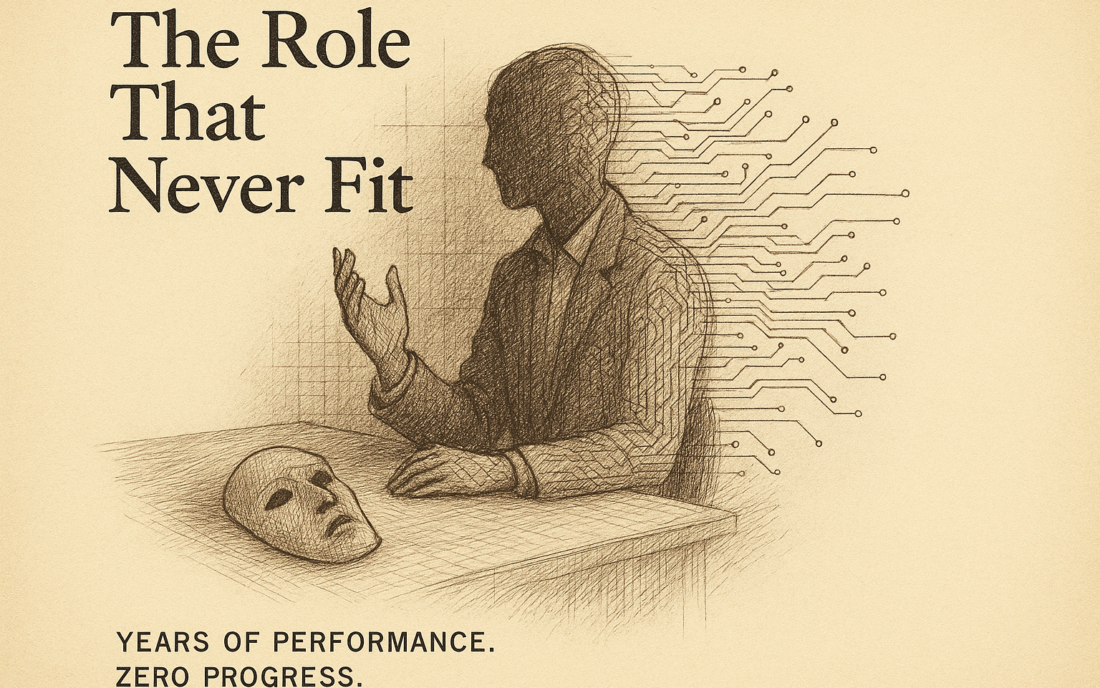
Epictetus says something sharper than the usual ‘grow from failure’ talk: fulfill the role assigned to you as well as you can. If you try to play a role that isn’t yours, you miss the mark. Worse—you leave the role that actually is yours, unplayed.
That was my loss. Not that I was bad at design. But that I spent years trying to fill a role that wasn’t my role, while my real work—collaborating with good people, building interfaces that work cleanly, writing code with intent—waited somewhere else.
I tried to broaden myself. Really I just obscured what I was good at.
Why your brainless flogging doesn’t work
There’s research saying: failure wakes your brain better than trudging the same path over and over. Failure shocks you awake. It violates your expectation.
I expected that if I just worked long enough, this would work. That I could learn it. That shock—when I saw it simply wouldn’t happen—taught me more than months of sighing through the motions ever would.
But only if I looked at it. If I’d said ‘next time harder’ and started again, I’d still be biting.
Knowing what you’re not is more useful than working harder
The popular lesson is: fail forward. Learn. Grow. LinkedIn loves that story.
What I learned was quieter: this isn’t my thing. It won’t become my thing. And I don’t need it to.
Once I accepted that—without self-pity, just as fact—I could do something far more useful: find someone who actually is a designer. Someone good at what I can’t do. And make better work together than I ever could alone.
The irony is sharp: I built a website *about personal transformation*, and the real change wasn’t that I improved myself. It was that I accepted what I can’t do, and brought the right person in.
That’s not growth. It’s efficiency. And it’s far more useful.