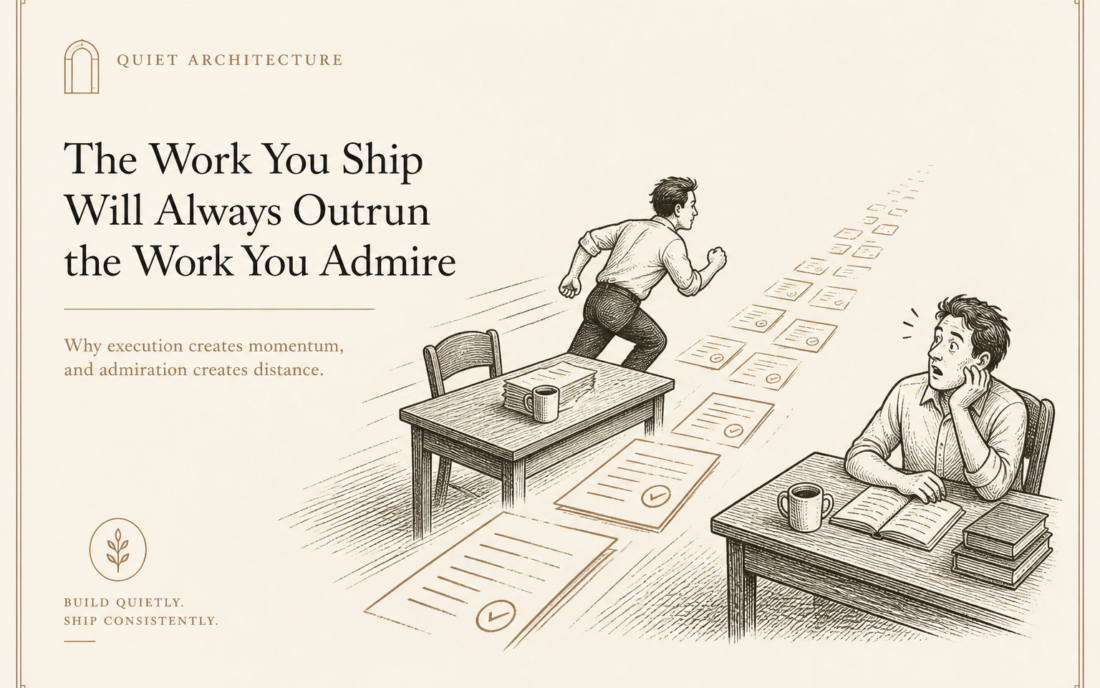
There are now two kinds of colleagues. One sends a PR, a proposal, a demo and half a blog post at 09:14. The other opens Outlook, sees that dump, and whispers: “how?”
That is no longer a character difference. It is a speed shift. People who pull AI into their craft produce at a tempo the rest no longer recognizes as “working hard”. It looks like magic. Or cheating. Or both, depending on how jealous the morning feels.
While you are still scheduling “a quick alignment”, the other person already made three versions and threw away the worst one.
Flabbergasted as a business model
The pattern is familiar. Someone on the team adopts tooling early. Not playfully, but as part of the craft: prompts, agents, scripts, checks. That person suddenly does not deliver one document, but a chain: analysis, options, code, tests, summary for stakeholders. The rest of the team is left flabbergasted. Literally. Mouth half open. “That would have taken two weeks?”
Yes. Before. When we still pretended typing was the work.
The nasty part is not that the early adopter is fast. The nasty part is that the gap becomes visible. People who do not join do not stand still. They sink relatively. Comparisons in reviews get awkward. “Why is your output half?” is not a fun question when the answer is: “because I am still staring into space like it is 2014.”
Speed is not quality (but quality without speed loses)
Let’s stay honest. Producing faster is not the same as thinking better. AI early adopters also make beautiful mountains of mediocrity, only quicker. There is a special hell where someone “ships” six half-baked features in one afternoon and then expects you to look pleased.
Still, speed often wins the meeting. Not because managers are philosophers, but because visible work wins politics. A working demo at 15:00 beats a careful objection at 15:10. The flabbergasted colleague is then right and unlucky.
What the person behind can still do
Do not panic. Do not pretend you are “principled” against tools while ChatGPT is open on your phone. Steal a bit of the tempo. Use AI for the boring meters, keep judgment for the corners. And when your colleague drops something impossible again: do not only ask “how fast?”, ask “what did you deliberately not do?”
That is the craft. In what you leave out. In what you check. In what you still understand yourself.
Otherwise we all run into the fog faster. And then nobody is flabbergasted anymore. Just wet.